
Deal hunting is the part of the job nobody schedules time for. Here's how to stop doing it by hand.
Stuart Miles Posted
It's 7am on the Tuesday of Black Friday week and I'm on my fourth retailer site of the morning, tabbing between a browser and a spreadsheet, trying to work out whether £229 for a pair of headphones is a genuine deal or just a number someone has put in a red box.
I did that for years at Pocket-lint. Plenty of publishers still do it now.
Deal hunting is the part of the job nobody schedules time for. It happens in the gaps - before the school run, between two other articles, at half nine at night when someone messages to say a rival has posted something you haven't. And it's slow, because the hard part isn't finding a discount. Discounts are everywhere. The hard part is working out whether the discount is real.
What makes a deal worth writing about
Three things, and only one of them is the price on the page.
Is it actually the lowest? A retailer showing 40 per cent off an RRP nobody has charged since 2023 isn't a deal, it's arithmetic. The number that matters is what the product has actually sold for over the last few months, and that isn't on the product page.
Will it still be there when you hit publish? A lightning deal that expires while you're writing the intro costs you the article and, worse, costs a reader a click that goes nowhere. Short-lived deals are worth covering, but you need to know that's what they are before you commit an hour to them.
Can you earn on it? The best price in the market is no use to you if it's at a retailer you have no affiliate relationship with. Miss this one and you've written a perfectly good article that pays you nothing. I've done it. Most people who've run a deals desk have done it.
Doing it by hand, faster
If you're hunting manually, three things make it quicker straight away.
Build a watchlist of twenty retailers, not two hundred. Most publishers earn the bulk of their commission from a handful of merchants, and the long tail eats your morning for almost nothing back. Work out which twenty actually pay you, and check those first.
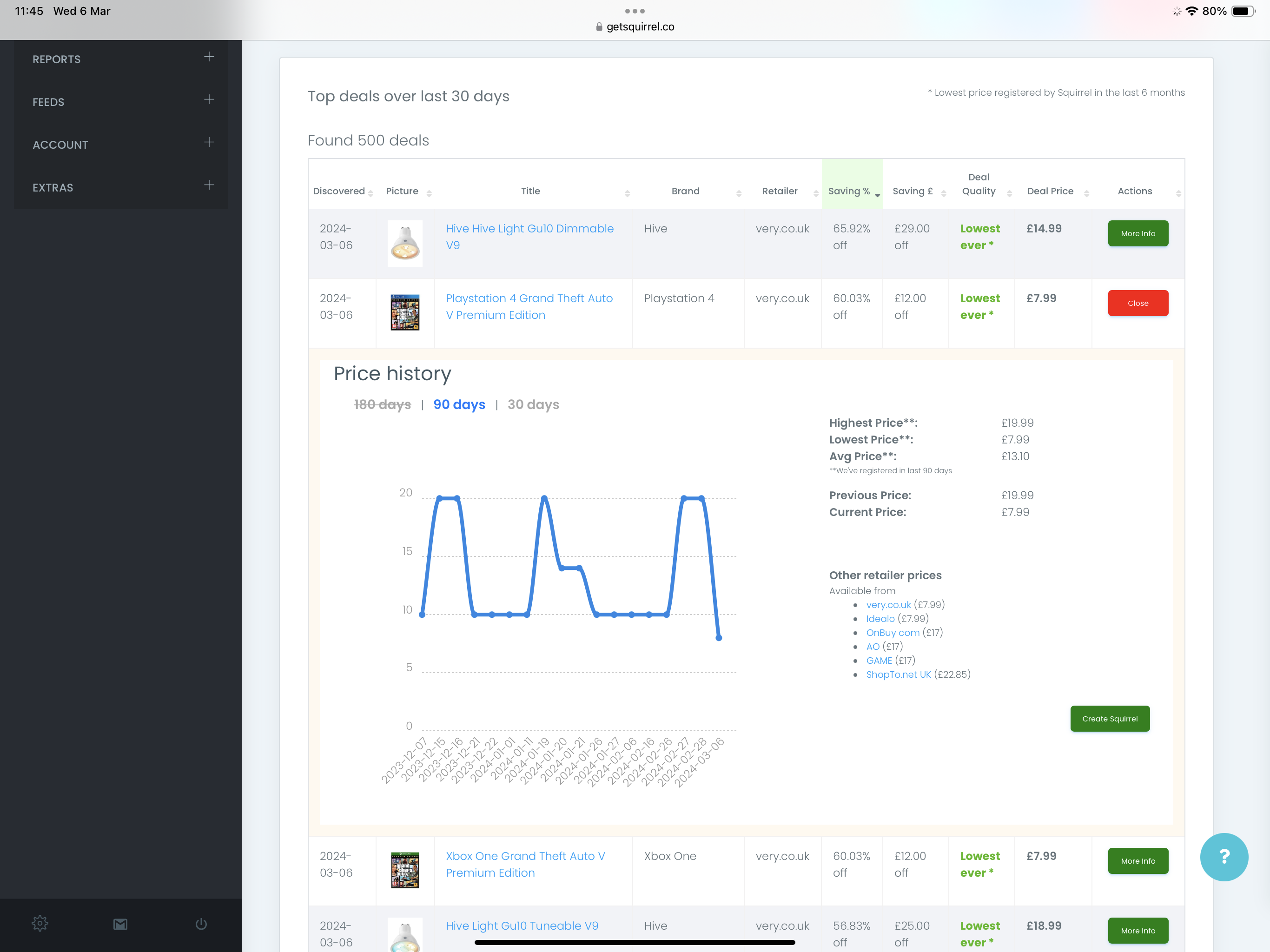
Judge against price history, not the claimed saving. If you can see what a product has cost over the past few months you can tell in seconds whether today's price is genuinely low or just this week's version of the same number.
And do the preparation before the season starts, not during it. Almost everything that makes Black Friday go well happens in October, which is a subject in its own right - there's a full guide to what to prepare and when if that's the bit you're circling.
Where the deal finder comes in
We built the Squirrel deal finder because we got tired of doing all of the above in a spreadsheet.
It shows the best deals we're tracking across thousands of retailers, refreshed hourly, and you can sort by retailer, brand, price, percentage saved or when the deal was first spotted. Every product carries 180 days of price history, so the question of whether today's price is actually low takes about two seconds rather than four tabs. You can see deals in the UK and the US, and you can add your own affiliate retailers into the system so the deals you're shown are ones you can actually earn on.
That last part is the bit that matters most, and it's the one people skip when they set it up.
But here's the honest limit. It won't tell you what's worth writing about. That's still your judgement, your audience, and your sense of what your readers actually buy - a genuinely brilliant price on something nobody wants is still a wasted afternoon. What it does is take the hunting out, so the hour you were spending finding candidates goes on writing the ones you've picked.
The deal was never the hard part. Finding it was.